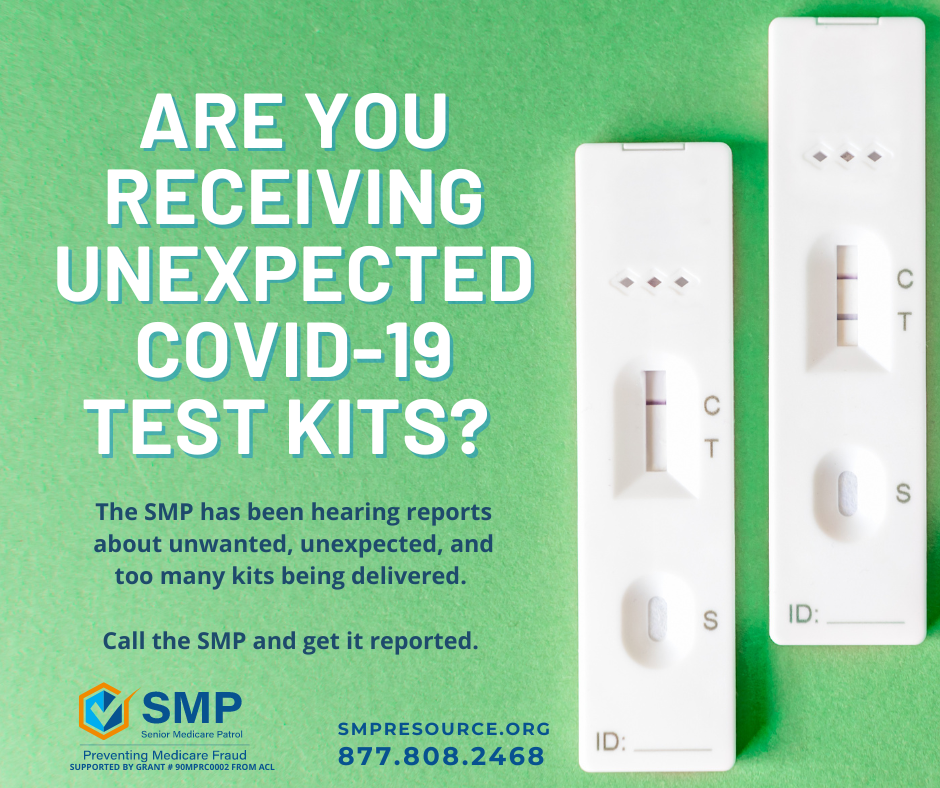
Jeanett Valenzuela Ayub, who owned and operated multiple durable medical equipment (DME) companies, pleaded guilty. She admitted that in operating the DME companies, she and co-conspirators paid unlawful kickback payments to sham marketing companies who provided bogus prescriptions for DME. Medicare beneficiaries confirmed that they were never examined by a doctor related to the prescribed DME and never used nor even opened the packages containing the DME. Read a Department of Justice press release.
New home health care, hospice providers blocked from Medicare
Trump administration freezes new Medicare enrollments for hospice and home health agencies
The Trump administration is expanding its fraud-busting initiative in federal health programs
NEW YORK — The Trump administration said Wednesday it is expanding its sweeping fraud-busting initiative in federal health programs with a nationwide six-month freeze on any new Medicare enrollments by hospice and home health agencies.
The moratorium will temporarily stop all new providers in these categories from signing up for reimbursement from Medicare, the federal insurance program for older adults across the country, the Centers for Medicare and Medicaid Services said in a news release.
Several alleged fraud schemes have been prosecuted in the hospice and home health care categories, and states have acknowledged that it is a legitimate concern. But some have pushed back on the administration’s aggressive tactics and raised concerns that the catchall efforts could needlessly punish law-abiding providers that are trying to serve patients.
The administration contends this freeze and other actions it is taking will help prevent potential fraud in Medicaid and Medicare and preserve funding and resources for people most in need. Under the six-month pause, existing hospice and home health care providers will continue to operate as usual. But CMS said it will “intensify targeted investigations, deploy advanced data analytics, and accelerate the removal” of providers in the category that are suspected of fraudulent activity.
Such a freeze is not unprecedented, said Tricia Neumann, a senior vice president and executive director for the program on Medicare policy at the health care research nonprofit KFF. She said President Bill Clinton’s Democratic administration also imposed a temporary moratorium on home health agencies.
“A brief moratorium gives the administration time to crack down on true fraud and prevent new fraudulent entities from popping up,” she said.
In recent months, CMS has suspended payments to hundreds of hospice and home care agencies in Los Angeles over alleged fraud and issued another six-month moratorium on suppliers of durable medical equipment, prosthetics, orthotics and certain other supplies in Medicare.
The administration also has approached at least five states with investigations into potential health care fraud and halted some $243 million in Medicaid payments to one of them, Minnesota, over fraud concerns. Last month, Oz announced CMS would add to that oversight by requiring all 50 states to share how they planned to revalidate some of their Medicaid providers.
In at least one case, the administration has erred in its accusations against states. In April, CMS acknowledged to The Associated Press that it made a significant error in figures it used to help justify a fraud probe in New York. The acknowledgment deepened doubts in the administration’s methods and raised a common criticism that has been made about the second Trump administration — that it tends to attack first and confirm the facts later.

Pharmacy owner sentenced
Taesung “Terry” Kim was sentenced to more than five years in prison. According to court documents, Kim’s pharmacies submitted approximately $24.4 million in claims to Medicare for medically unnecessary prescription drugs. He and his conspirators gave bribes to medical providers in the form of office rent and staff to induce them to direct prescriptions to the pharmacies. He paid customers in the form of supermarket gift certificates and cash to induce them to fill prescriptions at their pharmacies. Read a Department of Justice press release.
SMP Resource Center products often contain links to copyrighted material. These informational links are provided for convenience and informational purposes to educate; they do not constitute a guarantee, endorsement, or approval by the SMP of the information available on any linked external site. SMP bears no responsibility for the accuracy, legality, or content of the external site or for that of subsequent links. If you have any questions, please email info@smpresource.org.
Doctor resolves genetic testing allegations
Dr. Shayasta S. Mufti has agreed to pay $180,000 to resolve allegations that she violated the False Claims Act by fraudulently ordering medically unnecessary genetic testing for over 100 Medicare beneficiaries. The United States alleges that Dr. Mufti had no established physician-patient relationship with these patients, did not examine them, did not review or discuss the test results, and did not use the results to inform any course of treatment for any of the patients. Read a story from the Newark Post and a Department of Justice press release.
SMP Resource Center products often contain links to copyrighted material. These informational links are provided for convenience and informational purposes to educate; they do not constitute a guarantee, endorsement, or approval by the SMP of the information available on any linked external site. SMP bears no responsibility for the accuracy, legality, or content of the external site or for that of subsequent links. If you have any questions, please email info@smpresource.org.
Stopping Unwanted Calls From MA Plans
November 03, 2025
How do I stop unwanted outreach from Medicare Advantage companies?
| Dear Marci,
I’m turning 65 this year, and since early October I have been getting calls from Medicare Advantage Plans. How do I stop these unwanted calls? – Daniel (Lafayette, LA) |
Dear Daniel,
Many people experience unsolicited advertisements or other communication from Medicare Advantage Plans as they approach Medicare eligibility or during Fall Open Enrollment Period. These calls can be overwhelming, especially when you’re trying to make informed decisions about your healthcare coverage.
If you are receiving unwanted marketing calls from insurance companies, you can register with the National Do Not Call Registry. This is a free federal service that stops sales calls from legitimate businesses that follow the law. However, keep in mind that you may still get calls from scammers or those not following the rules. Join the list at www.donotcall.gov or by calling 888-382-1222 from the phone you want to register.
If you’re getting repeat calls from the same callers, you should block those specific phone numbers. Also know that by engaging with these callers, you may get more calls in the future. So when possible, do not pick up calls that are likely unwanted, hang up immediately if you realize this is a call you didn’t want to get, and report the number to the Federal Trade Commission at www.donotcall.gov.
It is also helpful to be aware of Medicare marketing rules that private plans must follow when promoting their products. These rules are meant to prevent plans from presenting misleading information about a plan’s costs or benefits. Medicare private plans can market their plan through direct mail, radio, television, and print advertisements. Agents can also visit your home if you invite them for a marketing appointment. However, insurance agents cannot:
- Call you if you didn’t give them permission to do so
- Visit you in your home, nursing home, or other place of residence without your invitation
- Offer gifts or prizes worth more than $15 to encourage you to enroll
- Market their plans at educational events or in health care settings (except in common areas)
- Sell you life insurance or other non-health products at the same appointment (known as cross-selling), unless you request information about such products
- Use the term “Medicare-endorsed” or suggest that their plan is a preferred Medicare plan
- Plans can use Medicare in their names as long as it follows the plan name (for example, the Acme Medicare Plan) and the usage does not suggest that Medicare endorses that particular plan above other Medicare plans
- Imply that they are calling on behalf of Medicare
If Medicare Advantage Plans or their agents engage in prohibited activity, you can report that behavior to the Senior Medicare Patrol (SMP) and to 1-800-MEDICARE (633-4227).
Hope this helps!
-Marci
Ambulance Fraud
Medicare will cover an ambulance ride to the hospital to diagnose or treat symptoms of an illness in an emergency. However, Medicare will not cover the cost of an ambulance if the reason for using the ambulance is not medically necessary, meaning the ride is not to treat or identify an illness. It will also not be covered by Medicare if other forms of transportation can move you safely or if it is for a ride to your doctor’s office, a community mental health center, or other health care appointments. Ambulance fraud, errors, or abuse can occur when ambulances are used for medically unneeded reasons.
Report potential telehealth fraud, errors, or abuse if:
- You were billed for more mileage than the actual distance traveled in the ambulance trip
- You think the cost of an ambulance ride is an unreasonable amount
Caregivers and family members, be on the lookout for:
- Calling for an ambulance for a loved one when it is not an emergency and they should be using other ways to travel
- Charges on your loved ones’ Medicare statements for ambulance trips that seem unreasonably high in cost, or the distance seems to be too far
Watch this video to learn how to read your Medicare Summary Notice (MSN) and Explanation of Benefits (EOB).
Report Suspected Fraud
COVID-19 Fraud
As the COVID-19 Public Health Emergency comes to an end, fraudsters are still attempting to bill Medicare for sham tests or treatments and are targeting individuals to illegally obtain money or Medicare numbers.
Report potential COVID-19 fraud, errors, or abuse if:
- You provided your Medicare number to someone other than your doctor, health care provider, or other trusted representative who contacted you through an unsolicited call, text, or email
- Someone comes to your door offering “free” coronavirus testing, treatment, or supplies
- You were told there was a COVID-19 Medicare card coming and you needed to confirm your Medicare number
- You took a survey and gave out your Medicare number in exchange for money or gifts
- You purchased a COVID-19 vaccination card
To learn more about tips related to COVID-19 fraud, click here.
To learn how to read your Medicare Summary Notice (MSN) or Explanation of Benefits (EOB), click here.
Report Suspected Fraud
To report suspected fraud, click here.
COVID-19 Fraud Resources
Ending of the Public Health Emergency:
- CMS Waivers, Flexibilities, and the Transition Forward from the COVID-19 Public Health Emergency
- COVID-19 Public Health Emergency Expires
- Administration for Community Living Blog: Public Health Emergency “Unwinding:” Changes to Medicaid Enrollment and Eligibility
- Consumer Fact Sheet on COVID-19 Tests (English) (Spanish)
- Medicare will continue to cover COVID-19 vaccines at no cost.
- You’ll be able to get COVID-19 PCR and antigen tests with no out-of-pocket costs when ordered by a doctor.
- However, Medicare will no longer cover or pay for over-the-counter (OTC) COVID-19 tests.
- Expanded telehealth services will continue through December 31, 2024.
SMP Consumer Fraud Alert Resources:
- SMP Consumer Fraud Alerts Page
- SMP Consumer Fraud Alert: COVID-19 (English) (Spanish)
- COVID-19 Consumer Tip Sheets
- Infographics
- Videos:
Coverage:
- Administration for Community Living (ACL): ACL.gov/COVID-19
- Medicare:
Testing Scams:
- Flyers
- Infographics – Optional: When posting about COVID-19 use #SMPwatchCOVID19
Vaccine/Treatment Scams:
- Infographics – Optional: When posting about COVID-19 use #SMPwatchCOVID19
Other COVID-19 Resources
Centers for Disease Control and Prevention (CDC):
- COVID-19 Webpage: CDC.gov/coronavirus/2019-ncov
CMS COVID-19 Resources for Vulnerable Populations:
Federal Trade Commission (FTC)
OIG Fraud Alert Resources
- OIG Fraud Alert
- Fraud Schemes Related to COVID-19 Vaccines
- Avoid COVID-19 Vaccine Scams Infographic
- Combatting COVID-19 Health Care Fraud
Social Security Fraud Alert Resources
Durable Medical Equipment Fraud
Durable medical equipment (DME) and orthotics companies offer a valuable service by providing wheelchairs, surgical supplies, catheters, and respiratory nebulizers as well as nutrition and tube feeding supplies and other health care equipment. DME and/or orthotics are considered medical equipment prescribed by your doctor that can withstand repeated use, serve a medical purpose, and can be used in the home. However, many fraudulent companies across the country are charging Medicare beneficiaries for this equipment without showing the medical necessity and sometimes without even sending the equipment to the beneficiaries.
Report potential DME fraud, errors, or abuse if:
- You see on your Medicare Summary Notice (MSN) or Explanation of Benefits (EOB) charges for equipment you do not need or did not receive
- You accepted an offer for “free” equipment or supplies but see Medicare was billed instead
- You receive medical equipment or supplies that you never requested or that you do not need
- You see on your loved one’s MSN or EOB suppliers billing Medicare for items after they passed away
- A supplier requests your Medicare number at a presentation, during a sales pitch, or in an unsolicited phone call
- A beneficiary knowingly accepts money, gifts, or unnecessary equipment and supplies from a supplier in exchange for their Medicare number
- A supplier delivers an off-the-shelf product to you but billed Medicare for a more costly product
To learn how to read your Medicare Summary Notice (MSN) and Explanation of Benefits (EOB), click here.
Report Suspected Fraud
To report suspected fraud, click here.
SMP Resources
- DME Fraud Tip Sheet(English) (Arabic) (Chinese Simplified) (French) (German) (Korean) (Russian) (Spanish) (Tagalog) (Vietnamese)
- DME Fraud Infographic(English) (Arabic) (Chinese Simplified) (French) (German) (Korean) (Russian) (Spanish) (Tagalog) (Vietnamese)
- DME Fraud Video(English) (Arabic) (Chinese Simplified) (French) (German) (Korean) (Russian) (Spanish) (Tagalog) (Vietnamese)
OIG Fraud Alert Resources
Genetic Testing Fraud
Scammers are offering Medicare beneficiaries cheek swabs for genetic testing to obtain their Medicare information for fraudulent billing purposes or possibly medical identity theft. Genetic testing fraud occurs when Medicare is billed for a test or screening that was not medically necessary and/or was not ordered by a beneficiary’s treating physician.
Here are several ways genetic testing is advertised:
- Cancer screening/test
- DNA screening/test
- Hereditary cancer screening/test
- Dementia screening/test
- Pharmacogenetics (medication metabolization)
- Parkinson’s screening/test
Report potential genetic testing fraud, errors, or abuse if:
- A company offers you “free” or “at no cost to you” testing without a treating physician’s order and then bills Medicare
- A company uses “telemedicine” to offer testing to you over the phone and arranges for an unrelated physician or “teledoc” to order the test
- You see on your Medicare Summary Notice (MSN) or Explanation of Benefits (EOB):
- Charges (usually thousands of dollars) for a broad range of genetic tests that you did not request or possibly even receive
- Charges for pharmacogenomic tests (to determine how you metabolize drugs) for drugs that do not apply to you
- A company requests your Medicare number (or possibly driver’s license) at health fairs, senior centers, assisted living facilities, malls, farmers markets, parking lots outside retail stores, home shows, or church-sponsored wellness events
Learn more about genetic testing fraud from this printable tip sheet.
Be on the lookout for genetic testing scams by reviewing your Medicare Summary Notice (MSN) and Explanation of Benefits (EOB).
Cardiovascular Genetic Testing Fraud
Cardiovascular genetic testing fraud occurs when Medicare is billed for a cardio type of test or screening that was not medically necessary and/or was not ordered by a beneficiary’s treating physician.
Here are several ways cardiovascular genetic testing is advertised:
- Cardio/cardiac genetic screening/test
- Cardiovascular genetic screening/test
- Comprehensive cardiovascular panel
- Comprehensive cardiomyopathy NSG
- Cardiovascular disease genetic kit
- Hereditary cardiovascular profile
Report potential cardiovascular genetic testing fraud, errors, or abuse if:
- A company offers you “free” or “at no cost to you” testing without a treating physician’s order and then bills Medicare
- A company uses “telemedicine” to offer testing to you over the phone and arranges for an unrelated physician or “teledoc” to order the tests
- Medicare is billed (usually thousands of dollars) for a broad range of cardiac genetic tests that you did not request or possibly even receive
- A company calls you stating your doctor or cardiologist requested that you have the testing done, and they will send you a testing kit
Learn more about cardiovascular genetic testing fraud from this printable tip sheet.
Report Suspected Fraud
SMP Consumer Fraud Alert Resources
- SMP Consumer Fraud Alerts Page
- SMP Consumer Fraud Alert: Genetic Testing(English) (Arabic) (Chinese Simplified) (French) (German) (Korean) (Russian) (Spanish) (Tagalog) (Vietnamese)
- Genetic Testing Fraud Tip Sheet(English) (Arabic) (Chinese Simplified) (French) (German) (Korean) (Russian) (Spanish) (Tagalog) (Vietnamese)
- Genetic Testing Fraud Infographic(English) (Arabic) (Chinese Simplified) (French) (German) (Korean) (Russian) (Spanish) (Tagalog) (Vietnamese)
- Genetic Testing Fraud Medicare Beneficiary Questions & Answers(English) (Arabic) (Chinese Simplified) (French) (German) (Korean) (Russian) (Spanish) (Tagalog) (Vietnamese)
- Genetic Testing Medicare Fraud Video(English) (Arabic) (Chinese Simplified) (French) (German) (Korean) (Russian) (Spanish) (Tagalog) (Vietnamese)
SMP Resources
- Cardiovascular Genetic Testing Tip Sheet(English) (Arabic) (Chinese Simplified) (French) (German) (Korean) (Russian) (Spanish) (Tagalog) (Vietnamese)
- Cardiovascular Genetic Testing Infographics(English) (English Light Background) (Arabic) (Chinese Simplified) (French) (German) (Korean) (Russian) (Spanish) (Tagalog) (Vietnamese)
OIG Fraud Alert Resources
Home Health Care Fraud
Medicare Parts A and B cover intermittent or short-term home health services. These services must be provided by a Medicare-approved home health agency that works with your doctor to manage your care. To be eligible for Medicare coverage:
- Your doctor must determine it’s medically necessary for you to receive skilled care services at home. Skilled care services at home could include part-time or “intermittent” nurse and nurse aide visits (personal, hands-on care) and rehabilitation services, which include speech-language pathology, physical and occupational therapy, and medical social services.
- Your condition must be expected to improve in a reasonable amount of time or your condition requires skilled therapy to maintain your current condition or prevent or slow, further deterioration.
- You must be considered “homebound.” This means you are unable to leave your home without assistance, it requires considerable and major effort, or it is considered dangerous due to your current health condition. You may leave home for medical care and some short or infrequent outings (for example, worship services) as long as you meet these conditions.
- Note: Even if you do not qualify for home health services, you may still be eligible to receive outpatient therapy services in a doctor’s office, outpatient hospital setting, rehabilitation agency, Comprehensive Outpatient Rehabilitation Facility (CORF), public health agency, or your home. Outpatient therapy services are covered by Medicare Part B and subject to the 20% copayment.
Report potential home health care fraud, errors, or abuse if:
- You see on your Medicare Summary Notice (MSN) or Explanation of Benefits (EOB) charges for:
- Home health services when you did not meet Medicare’s “homebound” criteria
- Services that were not deemed medically necessary by your doctor
- Home health services like skilled nursing care and/or therapy services that were not provided
- You were:
- Enrolled in home health services by a doctor you do not know
- Offered things such as “free” groceries or a “free” ride from a home health agency in exchange for your Medicare number or to switch to a different home health agency
- Charged a copayment for home health services
- Asked to sign forms verifying that home health services were provided even though you did not receive any services
- Someone came to your home and provided housekeeping or medication services, but you see on your Medicare Summary Notice (MSN) or Explanation of Benefits (EOB) that Medicare was billed for a covered service like skilled nursing or other therapy instead.
- You accept cash or gifts in exchange for going along with a home health scam.
To learn more about tips related to home health care fraud, click here.
To learn how to read your Medicare Summary Notice (MSN) and Explanation of Benefits (EOB), click here.
Report Suspected Fraud
To report suspected fraud, click here.
SMP Resources
- Home Health Care Fraud Tip Sheet(English) (Arabic) (Chinese Simplified) (French) (German) (Korean) (Russian) (Spanish) (Tagalog) (Vietnamese)
- Home Health Care Fraud Infographic(English) (Arabic) (Chinese Simplified) (French) (German) (Korean) (Russian) (Spanish) (Tagalog) (Vietnamese)
- Home Health Care Fraud Video(English) (Arabic) (Chinese Simplified) (French) (German) (Korean) (Russian) (Spanish) (Tagalog) (Vietnamese)