Outpatient Mental Health Care Fraud

Outpatient mental health care can be an important benefit to a beneficiary. Medicare covers outpatient mental health services in settings such as a doctor’s office or other health care provider’s office, a hospital outpatient department, or a community mental health center. Medicare only covers visits when they are provided by a health care provider who accepts assignment, which means that they agree to accept the Medicare-approved amount as full payment for any covered service provided.

Report potential outpatient mental health care fraud, errors, or abuse if:

  • You are picked up by a bus or van along with other beneficiaries and taken out for a meal and Medicare was billed for a psychiatric evaluation
  • You spend all day watching TV or playing games at a facility and Medicare was billed for group psychotherapy
  • You see on your Medicare Summary Notice (MSN) or Explanation of Benefits (EOB) charges for:
    • Mental health services or time spent in excess of what was received
    • Mental health services that were not received
    • Mental health services that were not provided by a psychiatrist or other doctor, clinical psychologist, clinical social worker, clinical nurse specialist, nurse practitioner, or physician assistant

To learn how to read your Medicare Summary Notice (MSN) and Explanation of Benefits (EOB), click here.

Report Suspected Fraud

To report suspected fraud, click here.

SMP Resources

Pharmacy and Prescription Drug Fraud

Pharmacy and prescription drug fraud is a consistent trend
in Medicare. Due to the lucrative nature of prescription drug diversion and
pharmacy scams, criminals continue to exploit Medicare Part D. Although there
are many types of prescription drug schemes, pharmacy fraud primarily occurs
when Medicare is billed for a medication that was not received or a beneficiary
is intentionally given a different prescription drug than was prescribed.

Report potential pharmacy or prescription drug fraud, errors, or abuse if:

  • You see on your Medicare Summary Notice (MSN) or Explanation of Benefits (EOB) charges for:
    • Prescription drugs (including refills) that were never picked up, delivered, or even prescribed
    • Prescription drugs (occasionally controlled substances such as opioids) that were prescribed by a health care provider you have never seen
    • Amounts beyond the quantity you were prescribed
    • A different prescription drug (often a more expensive drug) than the one you were originally prescribed or a drug that is not approved by the U.S. Food and Drug Administration (FDA)
  • A pharmacy intentionally provided you less medication than you were prescribed
  • A pharmacy issued you expired drugs
  • A pharmacy provided and billed for an expensive compounded medication, including topical pain creams, when a traditional or less expensive prescription was ordered by your provider
  • A company offers you “free” or “discount” prescription drugs without a treating physician’s order and then bills Medicare
  • A pharmacy offers you gift cards or other compensation, so you switch your prescriptions over to that pharmacy
  • A pharmacy automatically refills a prescription you no longer need. You do not pick up the prescription, but the pharmacy still bills Medicare
  • An individual offers to pay you for the use of your Medicare number to bill for prescription drugs or offers you cash or other compensation to pick up prescriptions on your behalf

To learn more about tips related to pharmacy and prescription drug fraud, click here.

To learn how to read your Medicare Summary Notice (MSN) and Explanation of Benefits (EOB), click here.

Report Suspected Fraud

To report suspected fraud, click here.

Report Suspected Medicare Fraud

SMP Resources

Remote Patient Monitoring (RPM) Fraud

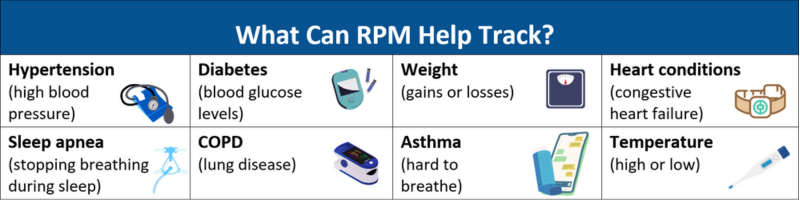
Remote patient monitoring (RPM) is the ability for health care providers to monitor certain parts of a person’s health from their home. Providers collect and analyze different physiologic data (like heart rate, blood glucose, breathing rate, etc.) and then use it to make and oversee a person’s treatment plan. RPM can be good for people with short- and long-term conditions because it can cut down on travel costs and reduce the risk of getting an infection or illness.

Report potential remote patient monitoring (RPM) fraud, errors, or abuse if:

  • You see charges on your Medicare statements for remote physiologic monitoring or remote therapeutic monitoring services:
    • You didn’t need
    • You didn’t get
    • You didn’t agree to
    • That were from a provider you do not know
  • You are offered a “free” device that tracks your daily steps, like a smartwatch, in exchange for your Medicare number or other personal information.
  • You are told RPM services are free to Medicare beneficiaries and then RPM services are billed to Medicare.
  • Your doctor’s office calls to ask how you are doing. Later, you notice they billed the phone call to Medicare as an RPM service.

To learn how to read your Medicare Summary Notice (MSN) or Explanation of Benefits (EOB), click here.

Report Suspected Fraud

To report suspected fraud, click here.

Telehealth Fraud

Medicare covers telehealth services (also known as teledoc services or telemedicine). This could include medical appointments, therapy, consultations, and other medical or health services. These services are provided through an interactive, live, two-way communication system with audio and video. Criminals are using telehealth services to steal from beneficiaries and the Medicare program.

Report potential telehealth fraud, errors, or abuse if:

  • You receive a call and are asked if you have pain or if you have a family history of cancer. They could be trying to approve you for a back brace, knee brace, or genetic testing that you do not need or want.
  • You are transferred by phone to someone who can “get you approved.” They may be trying to get you to agree to something you do not need or may not qualify for.
  • You are asked or pressured to agree to a test or procedure that would require an in-person visit.

Caregivers and family members, be on the lookout for:

  • Your loved one receives a call from someone they don’t know who pressures them to reveal personal information
  • Your loved one has a telehealth visit with a doctor they don’t know
  • Charges on your loved one’s insurance statements for appointments that never happened or from providers they don’t know

Watch this video to learn how to read your Medicare Summary Notice (MSN) or Explanation of Benefits (EOB).

Report Suspected Fraud

To report suspected fraud, click here.


Tip Sheets for Printing

This handout includes common Medicare fraud schemes in one document for ease of printing.

The schemes included are:

  • Ambulance
  • Cardiac Genetic Testing
  • COVID-19
  • Durable Medical Equipment (DME)
  • Genetic Testing
  • Home Health Care
  • Hospice
  • Medical Identity Theft
  • Medicare Card Scams
  • Misleading Marketing and Marketing Violations
  • Nursing Home Care
  • Outpatient Mental Health Care
  • Pharmacy and Prescription Drug
  • Remote Patient Monitoring (RPM)

Additional topics included are:

  • Medicare Fraud by the Numbers
  • Medicare Statements Tip Sheet

Report Suspected Fraud

To report suspected fraud, click here.

SMP Resources

Tip Sheets for Printing

Feds File Nationwide Lawsuit Against Walgreens

In a civil complaint, the Justice Department alleges that Walgreens knowingly filled millions of prescriptions for controlled substances that lacked a legitimate medical purpose, were not valid, and/or were not issued in the usual course of professional practice. Among the unlawful prescriptions were those for dangerous and excessive quantities of opioids, for early refills of opioids, and for the especially dangerous and abused combination of drugs known as the “trinity,” which is made up of an opioid, a benzodiazepine, and a muscle relaxant. The complaint alleges that Walgreens’ actions helped to fuel the prescription opioid crisis and that some patients died after overdosing on opioids shortly after filling unlawful prescriptions at Walgreens. Read a story from The Associated Press and a Department of Justice press release.

SMP Resource Center products often contain links to copyrighted material. The SMP Resource Center is providing these links as a convenience and for informational purposes in our efforts to report and educate on Medicare fraud; they do not constitute a guarantee, endorsement, or approval by SMP of any of the information available on the external site. SMP bears no responsibility for the accuracy, legality, or content of the external site or for that of subsequent links. If you have any questions or concerns about the links provided, please contact the SMP Center at nliebau@smpresource.org.

Man Admits Role in $10 Million Scheme

Adam Wayne Owens admitted his role in a $10 million kickback scheme with testing companies that arranged for at-home cancer genetic (CGx) tests. Owens and his conspirators provided personal and medical information about Medicare beneficiaries to the testing companies, which caused CGx testing kits to be sent to the beneficiaries. Once the tests were completed and returned, Owens’ conspirators submitted claims for reimbursement to Medicare. Read a story from Regtechtimes and a Department of Justice press release.
SMP Resource Center products often contain links to copyrighted material. The SMP Resource Center is providing these links as a convenience and for informational purposes in our efforts to report and educate on Medicare fraud; they do not constitute a guarantee, endorsement, or approval by SMP of any of the information available on the external site. SMP bears no responsibility for the accuracy, legality, or content of the external site or for that of subsequent links. If you have any questions or concerns about the links provided, please contact the SMP Center at nliebau@smpresource.org

Join FTC for Identity Theft Awareness Week

Has someone used your personal information to open accounts, steal your tax refund, or file fake health insurance claims? January 27 to 31 is Identity Theft Awareness Week (IDTAW) 2025. During IDTAW, the Federal Trade Commission (FTC) and its partners work together to share information on what identity thieves want to steal and why, understanding how identity theft happens, and learning how to avoid it. It’s an excellent opportunity to learn and talk about identity theft and raise awareness to help protect yourself, your family, and your friends. Read a story from the Federal Trade Commission.
SMP Resource Center products often contain links to copyrighted material. The SMP Resource Center is providing these links as a convenience and for informational purposes in our efforts to report and educate on Medicare fraud; they do not constitute a guarantee, endorsement, or approval by SMP of any of the information available on the external site. SMP bears no responsibility for the accuracy, legality, or content of the external site or for that of subsequent links. If you have any questions or concerns about the links provided, please contact the SMP Center at nliebau@smpresource.org

Chiropractor Pleads in COVID Scheme

Dennis Michael Peyroux pleaded guilty in connection with a scheme to bill Medicare for over-the-counter (OTC) COVID-19 test kits that were not requested or otherwise ineligible for reimbursement. According to court documents, Peyroux conspired with others to purchase Medicare beneficiary information, including names, Medicare identification numbers, and clearly fabricated recordings of individuals posing as beneficiaries and “requesting” OTC COVID-19 test kits. He agreed to pay over $3.2 million in restitution to Medicare. Read a Department of Justice press release.
SMP Resource Center products often contain links to copyrighted material. The SMP Resource Center is providing these links as a convenience and for informational purposes in our efforts to report and educate on Medicare fraud; they do not constitute a guarantee, endorsement, or approval by SMP of any of the information available on the external site. SMP bears no responsibility for the accuracy, legality, or content of the external site or for that of subsequent links. If you have any questions or concerns about the links provided, please contact the SMP Center at nliebau@smpresource.org

Update: Doctor Sentenced for $70 Million Scheme

In an update to a June 5, 2024, story, David M. Young was sentenced to 10 years in prison and ordered to pay more than $26.6 million in restitution. Read a Department of Justice press release.

Dr. David M. Young was convicted for causing the submission of over $70 million in fraudulent claims to Medicare for medically unnecessary orthotic braces and genetic tests ordered through a telemarketing scheme. According to court documents and evidence presented at trial, Young signed thousands of medical records and prescriptions for orthotic braces and genetic tests that falsely represented that the braces and tests were medically necessary and that he diagnosed the beneficiaries, had a plan of care for them, and recommended that they receive certain additional treatment. Read a Department of Justice press release.

SMP Resource Center products often contain links to copyrighted material. The SMP Resource Center is providing these links as a convenience and for informational purposes in our efforts to report and educate on Medicare fraud; they do not constitute a guarantee, endorsement, or approval by SMP of any of the information available on the external site. SMP bears no responsibility for the accuracy, legality, or content of the external site or for that of subsequent links. If you have any questions or concerns about the links provided, please contact the SMP Center at nliebau@smpresource.org